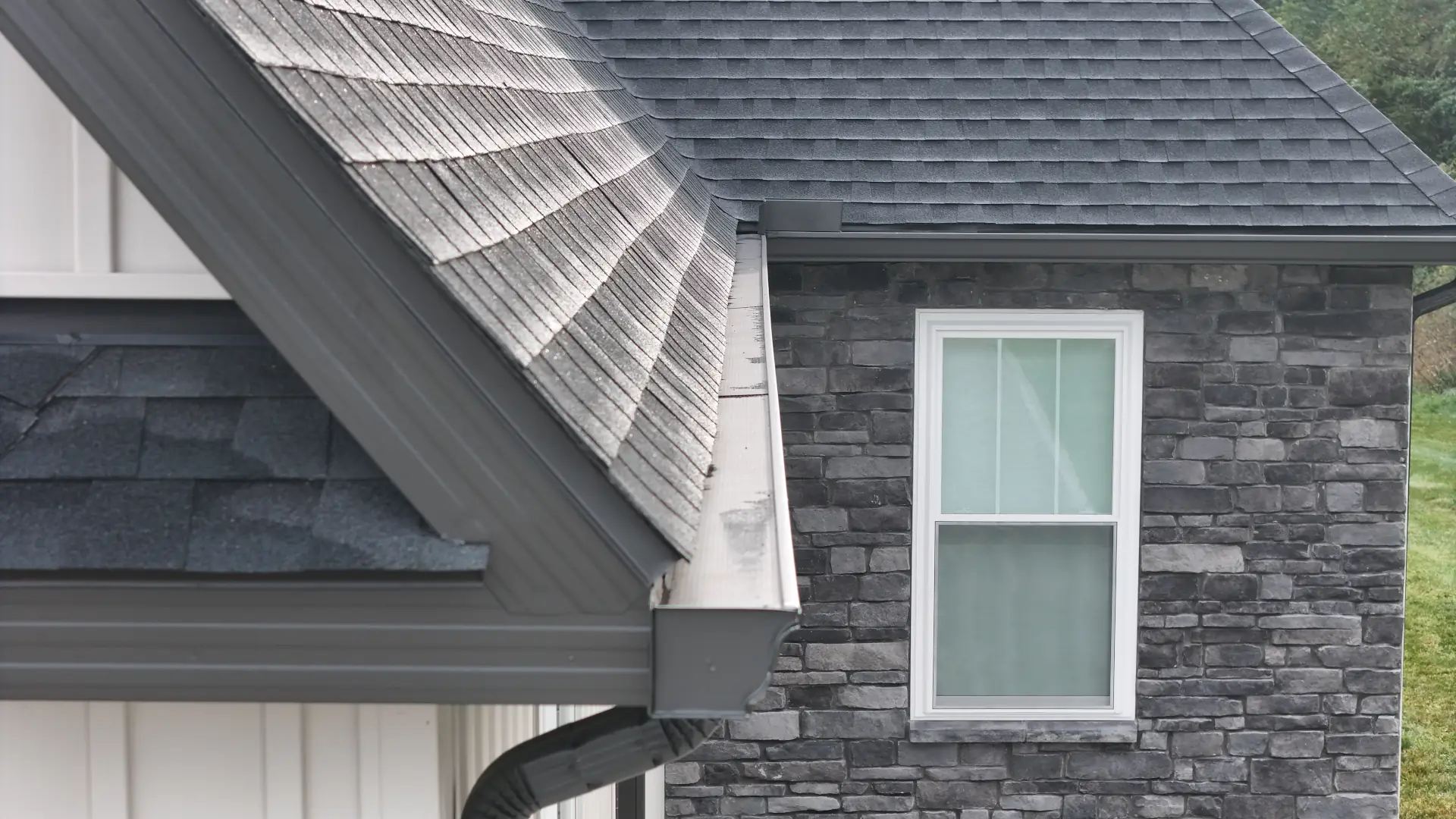
Your gutters have a straightforward job: collect water from your roof and move it safely away from your home. But when part of the system becomes clogged, damaged, or improperly positioned, it will lead to cracks in the foundation, basement leaks or rotted fascia.
Gutter drainage problems aren't always obvious. In some cases, homeowners don't realize there's an issue until they notice pooling water, damaged landscaping, or moisture around the home.
Knowing what to watch for can help you catch gutter problems earlier. Here are five signs your gutters and downspouts aren’t draining properly.
One of the easiest drainage problems to spot is water pouring over the sides of your gutters.
During an especially heavy Ohio storm, gutters can struggle to keep up with the volume of water coming off the roof. But if overflowing happens regularly, there may be another problem.
Leaves, sticks, shingle granules, and other debris restricts water flow through the gutters. A clogged downspout can create a similar problem by preventing collected water from leaving the system.
Overflowing water can run down siding, collect around landscaping, or end up near the foundation.
Regular gutter cleaning helps keep water moving in the right direction. If the gutters are clean but still overflow often, the system will likely need a professional evaluation.
Once rainwater enters a downspout, it still needs to be directed somewhere safe.
Take a look around your home shortly after a heavy rain. Are there puddles near the foundation? Does the ground stay saturated around one particular downspout?
These are signs that water isn't being carried far enough away from the house.
A properly positioned downspout extension helps direct runoff farther from the foundation. However, the right solution depends on your property. Grading, landscaping, soil conditions, and the natural direction of water flow can all affect drainage.
The key is to keep water moving away from the home rather than collecting beside it or flowing back toward the foundation.
Your flower beds and mulch can tell you quite a bit about how your gutters are performing.
Look around the areas beneath gutters and near downspouts. Washed-out mulch, channels in the soil, or noticeable erosion may indicate that too much water is being discharged in one location.
You might also notice divots forming beneath a gutter that regularly overflows.
These problems aren't only frustrating for your landscaping. They can signal that rainwater isn't being controlled effectively.
Adjusting a downspout extension, clearing a blockage, or addressing the gutter itself helps distribute and direct water more appropriately.
Water shouldn't regularly run down the exterior walls of your home.
If you notice streaks, stains, or discoloration beneath your gutters, watch that area the next time it rains.
Water may be spilling over because the gutter is clogged. It could also be escaping from a damaged seam or connection.
Pay particular attention to the areas where your gutters connect to each gutter downspout. Loose or damaged connections can allow water to escape before it reaches the ground-level drainage system.
Addressing these problems early will help keep rainwater moving through the system instead of across your home's exterior.
Sometimes the best way to identify a gutter problem is simply to watch the system work.
During a steady rain, water should be moving through your downspouts. If the gutters are collecting plenty of rain but very little water is coming out of a particular downspout, there may be a blockage somewhere in the system.
Leaves and other debris can travel from the gutter into the downspout, where they're more difficult to see from the ground.
You may also notice water backing up near the top of the downspout or leaking from its connections.
Don't assume a gutter is clear just because you can't see debris along the roofline. The problem could be farther down.
Good gutter drainage depends on more than one component.
The gutters need to collect water efficiently. Downspouts need to remain clear. Connections need to be secure. Downspout extensions need to discharge water in an appropriate location.
That's why it's helpful to think of your gutters as one complete drainage system.
A problem in one area can affect everything upstream. For example, a blocked downspout may cause an otherwise clean gutter to overflow.
Regular maintenance lets you catch these problems before they become harder to address.
Late fall is an especially important time to check your gutters.
Once most of the leaves have fallen, make sure gutters and downspouts aren't carrying a season's worth of debris into winter. Clogs prevent rain and melting snow from draining properly when temperatures begin to fluctuate.
You should also look for loose sections, damaged connections, and downspout extensions that have shifted out of position.
Taking care of these smaller issues before winter will help your drainage system perform more reliably through the months ahead.
You don't need to wait for a major drainage problem to have your gutter system evaluated.
If you're seeing overflowing gutters, pooling water, erosion, or other warning signs, Twincreek Roofing & Exteriors can help identify the cause and offer a plan to install or repair new gutters.
Keeping your gutters and downspouts working together is an essential part of protecting your home's exterior from unnecessary water problems.