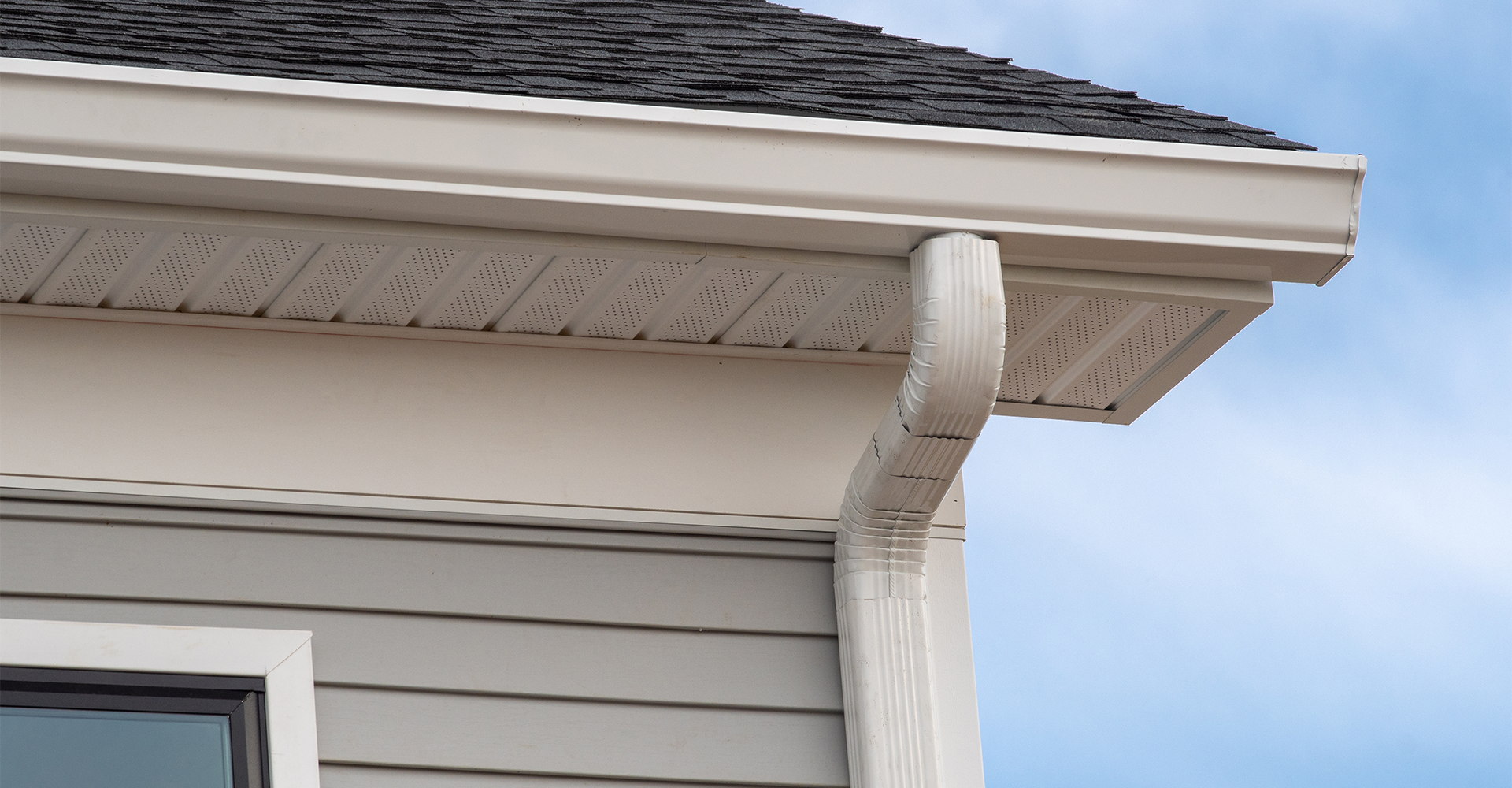
When homeowners think about protecting their homes from water, the roof usually gets most of the attention. But once rainwater reaches your gutters, it still needs somewhere to go. That's where downspouts and downspout extensions become essential.
A properly functioning gutter system collects water from your roof and directs it safely away from your home. If that process breaks down, hundreds of gallons of water can end up exactly where you don't want it: around your foundation.
Understanding how your gutter downspout system works and recognizing signs of poor drainage can help you prevent problems before they become expensive.
Gutters collect rainwater as it runs off your roof, but collecting water isn't enough. That water needs to move efficiently through the gutters, into the downspouts, and away from the house.
If any part of that path is blocked or poorly designed, water may overflow or collect near your home.
A complete drainage system should:
That's why simply cleaning your gutters doesn't always solve drainage problems. The entire system needs to work together.
A downspout that empties directly beside your house can repeatedly saturate the soil around the foundation.
During periods of heavy Ohio rainfall, that can become a significant amount of water.
Over time, improper drainage can contribute to soil erosion and unwanted moisture around the foundation. Water may also find its way into vulnerable areas, contributing to damp basements or crawl spaces.
The objective is simple: move roof runoff away from the house instead of letting it collect beside it.
A downspout extension continues the drainage path beyond the bottom of the vertical downspout.
Without an extension, water may empty only inches away from the foundation. An appropriately placed extension helps carry that runoff farther into an area where it can drain safely.
The best placement depends on factors such as the slope of your property, landscaping, soil conditions, and where water naturally travels.
Pay attention to what happens during a heavy rain. If water leaves the downspout and immediately runs back toward your house, an extension alone isn't enough. The drainage path itself needs attention.
You don't have to wait for water inside your home to discover a drainage problem. Many warning signs are visible around the exterior.
Watch for:
Another common warning sign is a gutter that remains full of water after the rain has stopped. That may indicate a clog, improper slope, or another drainage issue that should be investigated.
Leaves and debris don't only clog gutters. They can also enter downspouts and restrict water flow.
When that happens, rainwater backs up into the gutter. During a heavy storm, the gutter may overflow because the water has nowhere else to go.
This is one reason regular gutter cleaning is important even if the gutters look relatively clear from the ground.
Homes surrounded by trees can be particularly susceptible to debris buildup. Keeping gutters and downspouts clear before periods of heavy rainfall and before winter can help the entire system perform more reliably.
Even a properly functioning gutter system can struggle if the surrounding landscape directs water back toward your home.
The ground immediately around your foundation should generally encourage water to move away rather than collect beside the house.
Look around each downspout extension after rainfall. Where does the water actually travel?
If it flows back toward the foundation, collects in a low spot, or causes significant erosion, you may need to adjust the drainage setup.
A professional can help determine if the issue is related to the gutter system or if another drainage solution may be necessary.
Downspout drainage is important throughout the year, but fall is an especially good time to evaluate your system.
Falling leaves can quickly clog gutters and downspouts. If those blockages remain as temperatures drop, drainage can become even more difficult when freezing conditions arrive.
Cleaning your gutters and checking each gutter downspout before winter gives your system a better chance of handling rain, melting snow, and changing temperatures.
It's a relatively small maintenance task that can help prevent much larger headaches.
Some drainage problems are easy to spot. Others aren't.
If your gutters regularly overflow, your downspouts clog repeatedly, or water continues collecting around your home despite your maintenance efforts, it may be time for a professional evaluation.
Searching for gutter services near me can connect you with a local contractor who can inspect the complete system rather than focusing on a single component.
A professional can evaluate the gutters, downspouts, extensions, connections, and overall water flow to identify where the system is falling short.
Your roof, gutters, downspouts, and drainage system all work toward the same goal: keeping water away from places where it can cause damage.
Don't overlook the last few feet of that journey.
Clear gutters, downspouts, and properly positioned downspout extensions can make a meaningful difference in how rainwater moves around your property. Regular inspections and maintenance can help identify drainage problems early and keep your gutter system working effectively throughout Ohio's changing seasons.
If you're noticing overflowing gutters, pooling water, or downspouts that aren't keeping up during heavy rain, Twincreek Roofing & Exteriors can evaluate your gutter system and help determine what needs attention.