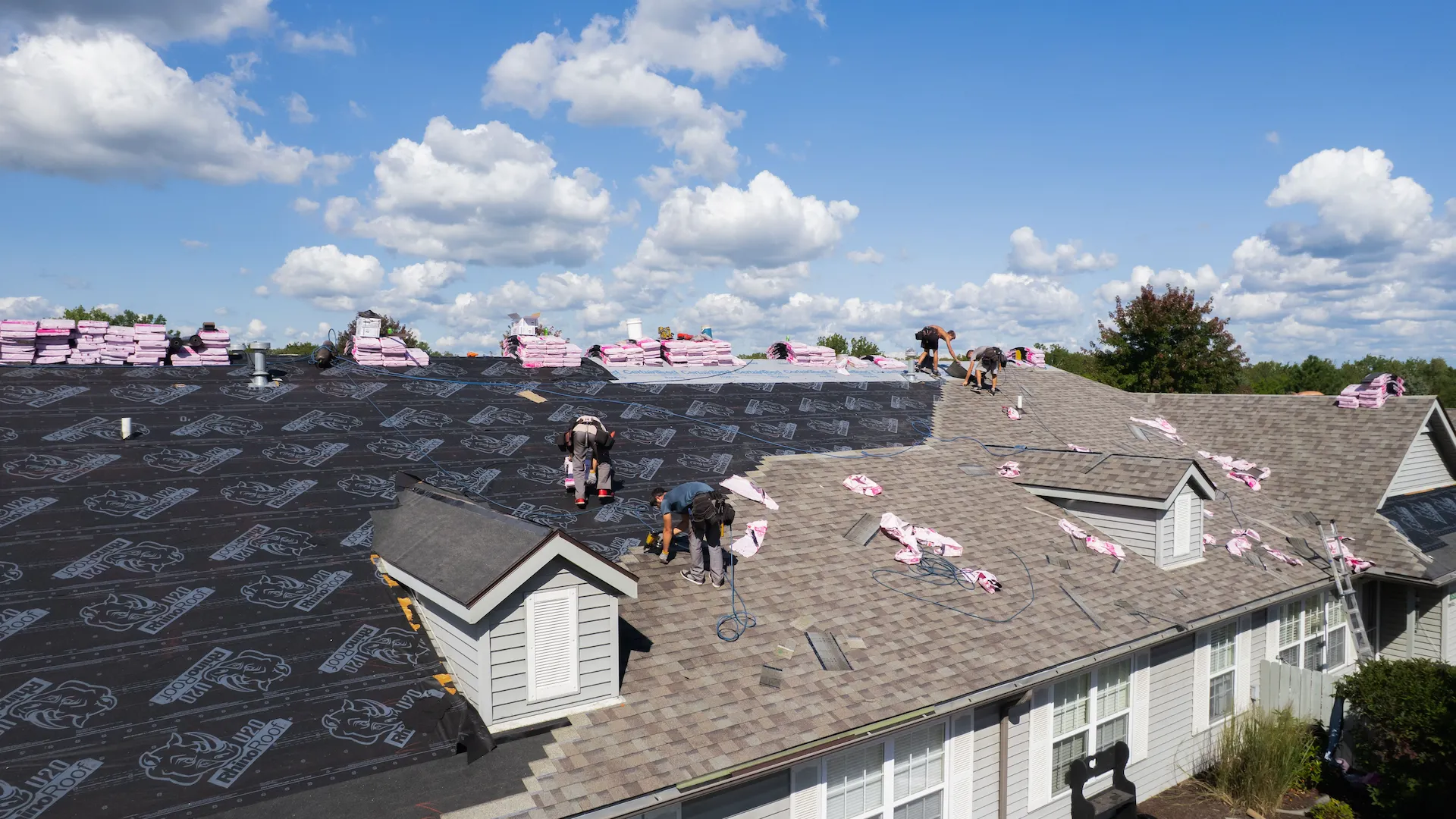
When you notice missing shingles, a leak, or another roofing problem, one of the first questions is often: Can this be repaired, or is it time to replace the entire roof?
The answer depends on more than the size of the immediate problem. Your roof's age, overall condition, repair history, and extent of damage all play a role.
Before another Ohio winter arrives, it's worth understanding whether a repair will provide a lasting solution or simply postpone an inevitable roof replacement.
Age alone doesn't determine whether a roof needs to be replaced, but it provides important context.
If your shingle roof is relatively young and otherwise in good condition, an isolated problem may be a good candidate for repair. A few damaged shingles or a small issue around flashing doesn't necessarily mean the entire roofing system has failed.
An older roof requires a different perspective. If the roofing materials are already nearing the end of their expected service life, repeated repairs may not provide the best long-term value.
If you don't know how old your roof is, a professional evaluation can help you better understand its condition.
One of the biggest factors in deciding between roof repair and replacement is how widespread the problem is.
Storm damage affecting a small section of an otherwise healthy roof may be repairable. The same can be true for an isolated flashing issue or a few damaged shingles.
Problems across multiple areas of the roof are more concerning.
Missing or deteriorating shingles throughout the roof, widespread granule loss, multiple leaks, or extensive wear can indicate that the roofing system as a whole is declining.
In those cases, replacing individual sections may only address the symptoms temporarily.
How often have you had someone work on your roof?
An occasional repair isn't unusual. But if you're calling a roofing contractor every year to address another leak or damaged area, those costs can begin to add up.
Repeated repairs can also indicate that the underlying roofing system is reaching the point where patching individual problems is no longer practical.
Think of annual roof maintenance as inexpensive insurance. Routine inspections and small, planned repairs can help extend the life of a healthy roof and create more predictable maintenance expenses.
That's different from repeatedly repairing a roof that is already failing. At some point, replacement may provide better value than continuing to invest in short-term fixes.
Not every roofing problem is obvious from the ground.
Sometimes, the first warning appears inside the home.
Water stains on ceilings or walls, damp insulation, unexplained moisture, or signs of water in the attic can indicate that the roofing system needs attention.
Water can also travel after entering a home, so the location of an interior stain isn't always directly beneath the source of the leak.
If you see signs of moisture, have the problem evaluated rather than covering the stain and hoping it doesn't return.
A roofing problem that seems manageable during mild weather may become more troublesome once winter conditions arrive.
Snow, ice, wind, freezing temperatures, and freeze-thaw cycles can put additional stress on roofing materials. Existing openings or deteriorated areas can become more vulnerable as weather conditions change.
That doesn't mean every roof with minor wear needs to be replaced before winter.
It does mean fall is a smart time to understand your roof's condition. If a simple repair is all that's needed, you can take care of it. If an Ohio roof replacement makes more sense, you can plan the project instead of dealing with an emergency later.
A repair will almost always cost less upfront than a full replacement. But upfront cost shouldn't be the only consideration.
If a repair is likely to give an otherwise healthy roof several more years of useful life, it may be money well spent.
If you're repairing one area while another part of an aging roof is likely to fail soon, continuing to pay for individual fixes may become more expensive and frustrating over time.
When evaluating your options, ask what you're actually getting for the money. Understanding the condition of the entire roof can help you make a decision based on long-term value rather than simply choosing the least expensive solution today.
If replacement is the better option, the estimate shouldn't be your only consideration when choosing a contractor.
Quality roofing materials, proper installation, accurate measurements, and warranty protection all contribute to the performance of the finished roof.
At Twincreek Roofing & Exteriors, EagleView technology helps provide accurate roof measurements when preparing estimates. Our roofing work is also backed by a 15-year labor warranty, along with applicable manufacturer warranties.
Combined with Amish and Mennonite craftsmanship and fair pricing, these details help homeowners understand what they're investing in beyond the final number on an estimate.
You shouldn't have to guess whether your roof needs another repair or a full replacement.
If you're searching for roofing services near me because you've noticed a leak, damaged shingles, or other warning signs, start with a professional evaluation. A contractor can look at the immediate problem while also considering the roof's overall condition.
The goal isn't to replace a roof that still has useful life. It's also not to continue putting money into temporary repairs when replacement has become the more practical choice.
Before winter arrives, contact Twincreek Roofing & Exteriors for a free estimate. We'll help you understand the condition of your roof and determine the right next step for your home.